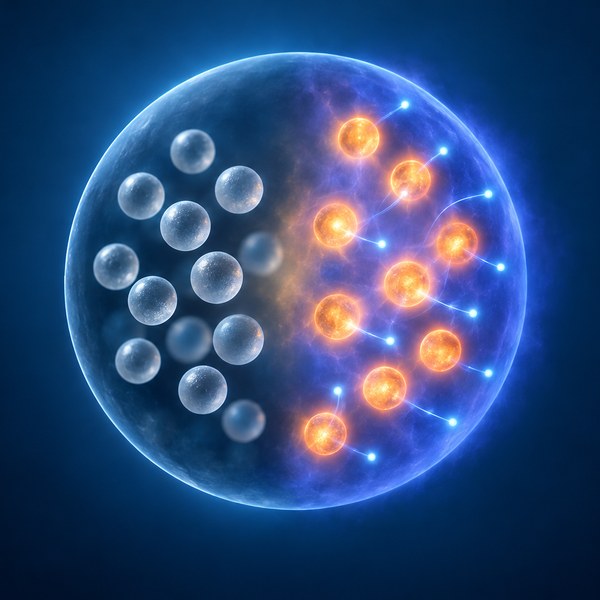
Take an ordinary gas. What has to happen to it, and how hot, how dense and how big does it have to be, before we are allowed to call it a plasma? This first lesson of Plasma 101 starts with the air in your room, where heat alone should not ionize even one molecule, and ends with the Sun’s core, lightning, an ICP etch chamber and the solar wind. Along the way you will meet the Saha equation, which explains why gases ionize far below their ionization energy; the Debye length, which sets how far a single charge can be felt; and the plasma parameter, which tells you whether the crowd of …
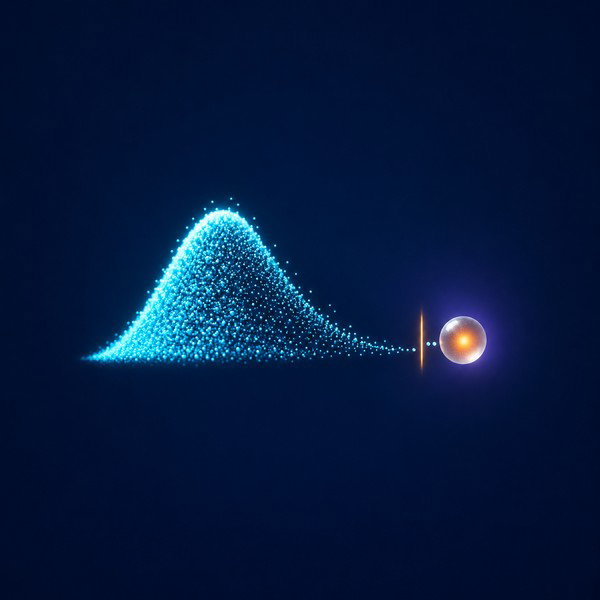
Plasma physicists give temperatures in volts. Say “the electrons are at 2 eV” and you have quoted an energy you can set straight against an atom’s ionization energy. This second lesson of Plasma 101 asks one sharp question: if the electrons in a plasma are at 2 eV, how many of them carry enough energy to ionize an atom? To answer it you will build the Maxwell distribution from two simple pieces, find out why a 2 eV crowd has an average energy of 3 eV, and see why about one electron in 790 can ionize argon, and why a plasma just 10% hotter doubles that number. Along the way …