-
Graphene Oxide Inhibits VIM-2 β-Lactamase — Waterloo, 2015
Jun 11, 2026 | ACS MATERIAL LLCHuang, P., Pautler, R., & Shanmugaraj, J. (2015). Inhibiting the VIM-2 metallo-β-lactamase by graphene oxide and carbon nanotubes. *ACS Applied Materials & Interfaces*. https://doi.org/10.1021/acsami.5b01954
ACS Applied Materials & Interfaces · 2015
University of Waterloo researchers used ACS Material graphene oxide to inhibit the VIM-2 metallo-β-lactamase, achieving strong dose-dependent enzyme suppression.
About this research
Researchers at the University of Waterloo (Waterloo Institute for Nanotechnology) used graphene oxide purchased from ACS Material together with carbon nanotubes to inhibit VIM-2, one of the most clinically relevant metallo-β-lactamases (MBLs) driving antibiotic resistance, demonstrating strong dose-dependent enzyme suppression through hydrophobic interactions.
Metallo-β-lactamases degrade a broad spectrum of β-lactam antibiotics, including the latest carbapenems, and current clinical β-lactamase inhibitors are ineffective against them. Decades of small-molecule inhibitor development have produced limited success, motivating the search for alternative inhibition strategies. This study probes whether nanomaterials with varied surface chemistries can serve as enzyme-binding scaffolds and provide design insight for future MBL inhibitors.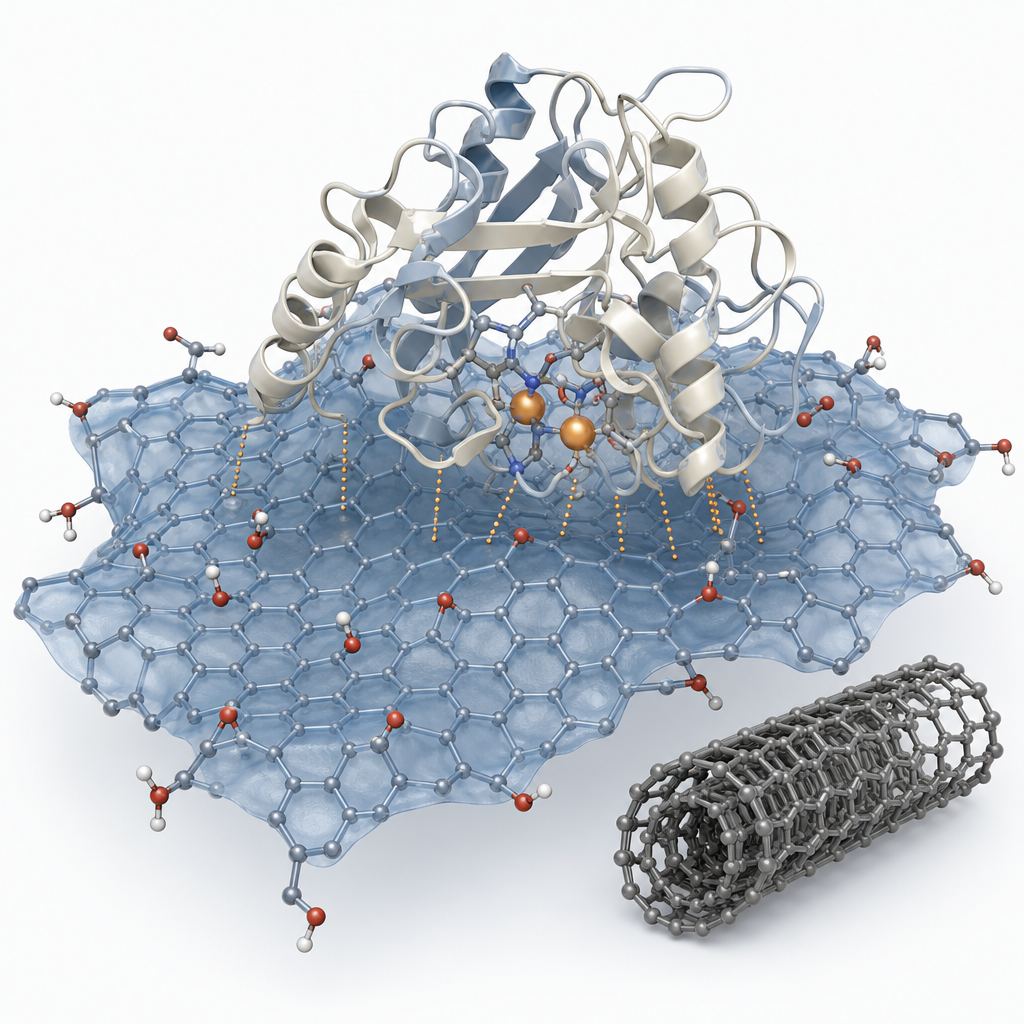
The team screened 10 nanomaterials covering different charge, hydrophobicity, and chemical-bonding profiles, including SiO2 nanoparticles, DOTAP liposomes, nanodiamond, CeO2, and various carbon nanostructures. Graphene oxide from ACS Material was characterized by TEM and used as a central candidate inhibitor. VIM-2 was expressed in E. coli BL21, purified by Sepharose-Q and Superdex 200 chromatography, and assayed with nitrocefin as a chromogenic substrate at 482 nm. Activity was measured as a function of nanomaterial concentration, and circular dichroism on the JASCO 700 instrument was performed with GO additions up to 1 mg/mL to assess effects on protein secondary structure.
The enzyme exhibited an apparent Zn2+ Kd of 7.4 μM and a turnover number of ~40 s^-1 under saturating Zn2+. Graphene oxide produced clear dose-dependent inhibition, with significant suppression at 20 μg/mL, while carbon nanotubes achieved complete inhibition at just 2 μg/mL. Negatively charged SiO2 and positively charged DOTAP liposomes showed no inhibition, and sp3 nanodiamond was also inactive, indicating that hydrophobic and π–π interactions with sp2 carbon surfaces—not surface charge—drive VIM-2 adsorption. Protein displacement assays with BSA confirmed noncompetitive binding. The ACS Material graphene oxide thus provided a reproducible nanocarbon platform for probing enzyme–nanomaterial interfaces and informing rational MBL inhibitor design.How ACS Material products were used
- Graphene Oxide (Graphene Series) — “Graphene oxide was purchased from ACS Material (Medform, MA).”
Product Performance in this StudyACS Material graphene oxide acted as a potent noncompetitive inhibitor of VIM-2 metallo-β-lactamase, producing dose-dependent inhibition with significant activity loss at 20 μg/mL via hydrophobic interactions with the enzyme.
Related product categories