-
Y-type Zeolites
Aug 19, 2019 | ACS MATERIAL LLCZeolite Y is the faujasite-structured aluminosilicate that powers the world's refineries. Its large supercages, strong and tunable acidity, and the stabilizing chemistry behind ultrastable Y (USY) and rare-earth ultrastable Y (REUSY) make it the active component of fluid catalytic cracking and a versatile adsorbent. This guide covers its structure, composition, acidity, synthesis, stabilization, hierarchical forms, catalysis, and adsorption — grounded in the primary literature, with interactive models at each step.
Quick answerZeolite Y has the faujasite (FAU) framework: sodalite cages linked through hexagonal prisms into a structure with large ~12 Å supercages reached through 12-membered-ring windows about 7.4 Å wide. It is defined by a framework Si/Al ratio above ~1.5 (below that it is the X zeolite). Aluminum-rich as-made Y is stabilized by steam dealumination to ultrastable Y (USY) and by rare-earth ion exchange to REUSY, which together give the thermal stability, large pores, and Brønsted acidity that make zeolite Y the heart of fluid catalytic cracking (FCC).
On this page- 1 The Faujasite Framework
- 2 Composition and the X/Y Boundary
- 3 Acidity and Active Sites
- 4 Synthesis of NaY
- 5 Ultrastable Y (USY): Dealumination
- 6 REUSY: Rare-Earth Exchange
- 7 Hierarchical and Mesoporous Y
- 8 Fluid Catalytic Cracking
- 9 Adsorption and Separation
- 10 Synthesis Directions and Sustainability
- 11 Conclusion
- 12 ACS Material Y-Type Products
- 13 Frequently Asked Questions
- 14 References
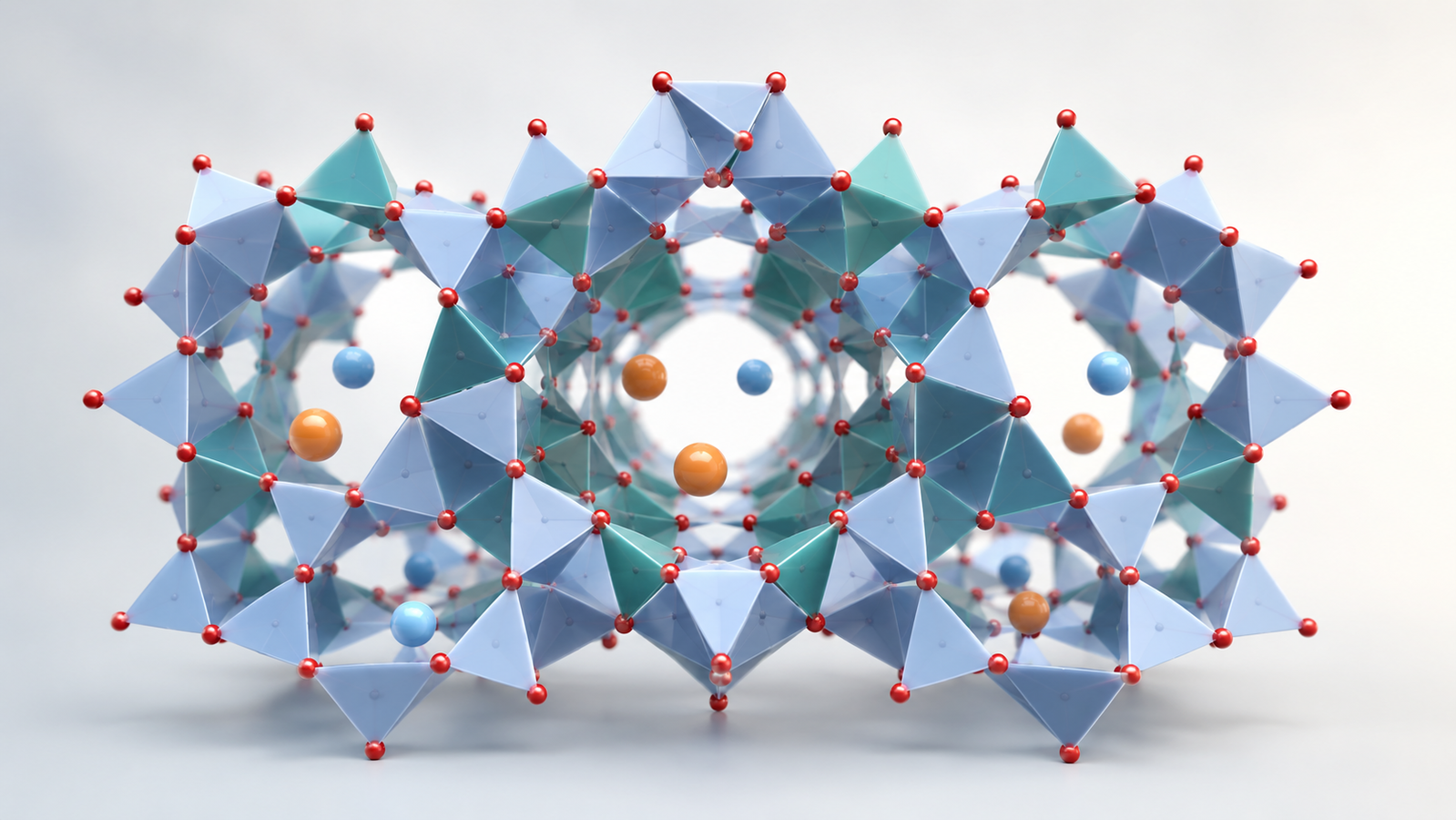
Figure 1. The faujasite (FAU) framework of zeolite Y: sodalite cages joined through hexagonal prisms enclose large supercages accessed by 12-ring windows. The Faujasite Framework
Zeolite Y has the faujasite structure (framework type FAU in the International Zeolite Association code), the synthetic counterpart of the rare mineral faujasite.3 It is built from sodalite cages (the β-cage, a truncated octahedron of SiO₄ and AlO₄ tetrahedra) connected through hexagonal prisms (double 6-rings) in the same topology as carbon atoms in diamond. This arrangement encloses large, near-spherical supercages (the α-cage, roughly 12–13 Å across) linked tetrahedrally through pore openings of about 7.4 Å defined by rings of twelve oxygen atoms.23 Each cubic unit cell contains 192 tetrahedral (Si,Al) sites, eight supercages, eight sodalite cages, and sixteen hexagonal prisms. That wide 12-ring window is the defining practical feature of zeolite Y: it admits much larger molecules than the 8- and 10-ring pores of most other commercial zeolites, which is why faujasite dominates large-molecule acid catalysis.4
Composition and the X/Y Boundary
The commercial synthesis of zeolite Y was claimed by Breck in 1964,1 following the industrial manufacture of the A and X zeolites. Zeolite NaY is topologically identical to the type X aluminosilicate; the two are distinguished by composition. Breck set the boundary at a framework silicon-to-aluminum ratio of about 1.5: frameworks below this value are classified as zeolite X, and those above it as zeolite Y.2 The higher silica content of Y lowers its framework charge density and raises its thermal and hydrothermal stability relative to X.4 Because aluminum-rich frameworks are intrinsically less stable in hot water and acids, and because zeolite Y can be crystallized directly only up to a Si/Al of about 3, the high-silica, catalytically robust grades are produced by post-synthetic removal of framework aluminum — the dealumination chemistry discussed below.6
Acidity and Active Sites
Catalysis on zeolite Y is driven by its acid sites. Each framework aluminum creates a net negative charge; when that charge is balanced by a proton, the result is a bridging Si–OH–Al group — a strong Brønsted acid site. Protons are introduced by exchanging Na⁺ for NH₄⁺ and calcining (deammoniation), or by hydrolysis of polyvalent cations. Lewis acid sites arise from extra-framework aluminum and from dehydroxylation. The strength and number of these sites — not merely their count — govern activity, and acid strength depends on framework composition, local geometry, and confinement rather than on a single variable.7 Because the measured acidity also reflects how a probe molecule fits the pore, values obtained with bases such as ammonia, pyridine, and CO must be interpreted alongside the framework structure.8 In faujasite, protons in the smaller sodalite cages and in the supercages differ in accessibility and reactivity, giving zeolite Y a distribution of site environments that can be tuned by composition and exchange.
Synthesis of NaY
Aluminum-rich zeolites such as A, X, and Y are crystallized from aluminosilicate gels; the crystallinity, Si/Al ratio, and secondary pore volume of the product depend on the parent gel and on the NaY seed crystals.6 Typical precursor compositions are roughly 2.0 SiO₂ : Al₂O₃ : 3.4 Na₂O : 170 H₂O for NaA, 4.5 SiO₂ : Al₂O₃ : 6.3 Na₂O : 280 H₂O for NaX, and 9.0 SiO₂ : Al₂O₃ : 3.0 Na₂O : 120 H₂O for NaY, giving final Si/Al ratios near 1, 1–1.2, and 2.2–3.0 respectively. Because direct synthesis caps the Si/Al ratio near 3, heating ammonium-Y in dry versus wet air gives different dealumination outcomes that are exploited industrially.30 Modern work increasingly aims at greener routes — organotemplate-free and even solvent-free crystallizations — to reduce the cost and waste of zeolite manufacture.17
Ultrastable Y (USY): Steam Dealumination
Ultrastable Y (USY) is the workhorse form used in catalytic cracking, introduced as a fluid-cracking catalyst around 1970. It is prepared from ammonium-Y by steaming at high temperature, typically above 773 K: water vapor hydrolyzes aluminum out of the framework, and as the framework is partially dealuminated it is simultaneously stabilized.3031 Mechanistic studies show the first step is water adsorption on a framework aluminum, forming a distorted or pentahedral Al that is progressively hydrolyzed to a non-framework position; the expelled aluminum becomes extra-framework aluminum (EFAL).1021 The framework Si/Al ratio rises, the walls become more siliceous and hydrophobic, the unit cell contracts, and secondary mesopores open up that improve molecular transport. The long-standing claim that steaming raises intrinsic Brønsted acid strength is now disputed: careful spectroscopy indicates the total number of Brønsted sites falls during steaming while alumina-like EFAL clusters accumulate in the pores.32246 The model below lets you dealuminate the framework and watch the Si/Al ratio and stability respond.
REUSY: Rare-Earth Exchange
Among commercial fluid catalytic cracking catalysts, REUSY — rare-earth ultrastable Y — is one of the most widely used. It is exchanged with mixed rare-earth elements, predominantly lanthanum with some cerium.5 Each rare-earth cation carries a 3+ charge, so a single RE3+ balances three framework charges. Crystallographic studies place the rare-earth ions inside the small sodalite cages, near the double six-membered rings, where they coordinate to framework oxygens and bridge several of them; this multicore bridging is the structural origin of the stabilization, anchoring aluminum and slowing dealumination.18 Rare-earth exchange raises the equilibrium framework aluminum content and acid-site density, which in turn promotes hydrogen transfer and tunes selectivity, while smaller-radius rare earths can stabilize the framework even more effectively than lanthanum.522 REUSY is made starting from USY, either by acid treatment at a controlled pH followed by rare-earth exchange, or by exchanging directly with a rare-earth chloride solution of a chosen acidity. The interactive model shows how the exchange works.
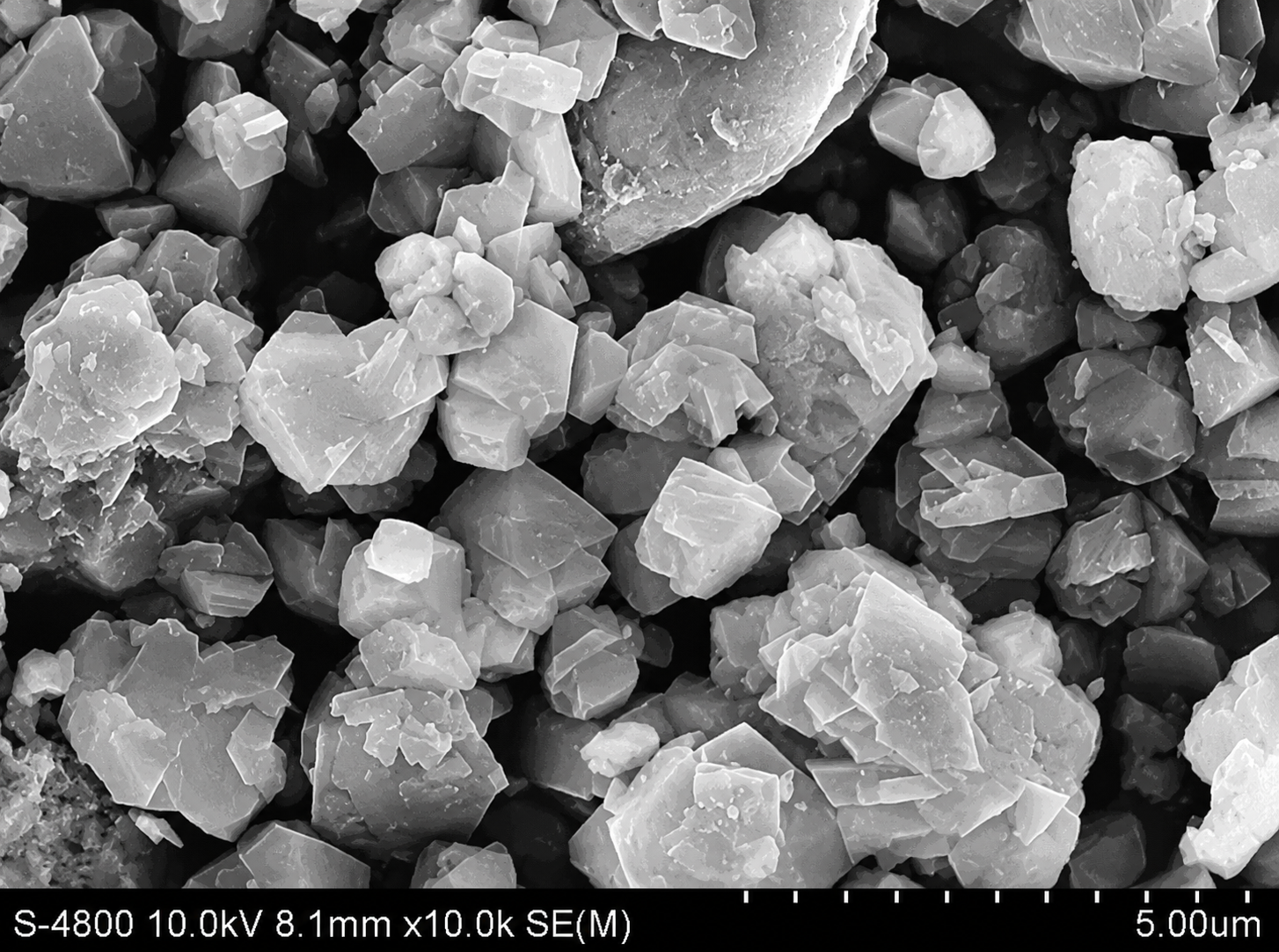
Figure 2. SEM image of ACS Material Y-RE2, a rare-earth ultrastable Y (REUSY) zeolite. Hierarchical and Mesoporous Y
The supercage is large by zeolite standards, but it is still microporous, so diffusion of bulky feed and product molecules through long micropore paths can limit the rate and selectivity of a reaction.20 Introducing a secondary network of mesopores shortens the diffusion path while keeping the crystalline, strongly acidic micropore walls — the concept of hierarchical zeolites.9 Mesopores can be generated top-down by dealumination or desilication, but these random methods can sacrifice acid sites; controlled work shows that mesopore quality, not just quantity, determines catalyst lifetime.12 A more ordered route is surfactant templating, in which a cationic surfactant assembles into micelles inside the crystal under mild alkaline conditions, opening uniform mesopores while preserving crystallinity and acidity.1316 Spectroscopy has since confirmed intracrystalline micelle formation as the key step,19 the thermodynamics of the process have been mapped,14 and the approach has been extended to tunable hybrid zeolites.15 Mesostructured zeolite Y made this way shows superb hydrothermal stability and markedly better cracking of bulky molecules, and was the first hierarchical zeolite commercialized in FCC.13 Advanced microscopy now lets researchers visualize these pore networks directly.11
Fluid Catalytic Cracking
Zeolite Y has been the primary active component of fluid catalytic cracking (FCC) — one of the largest commercial processes using zeolites and a major source of gasoline-range fuels — since its introduction in the early 1960s.527 Its dominance comes from a rare combination of properties: a high surface area with relatively large 12-ring pores, strong Brønsted acidity, excellent thermal and hydrothermal stability, and low cost.29 Cracking proceeds through acid-generated carbenium-ion intermediates: a large gas-oil molecule diffuses into the supercage, is protonated at a Brønsted acid site, and its C–C bonds break to give smaller, gasoline-range products that diffuse out.28 In the harsh, cyclic regenerator environment the catalyst is repeatedly steamed and exposed to metal contaminants (V, Ni, Fe) that dealuminate and degrade the zeolite; rare-earth and phosphorus stabilization, hierarchical pores, and ZSM-5 additives (for propylene) are the main levers used to manage this.5 The cracking cycle is shown below.
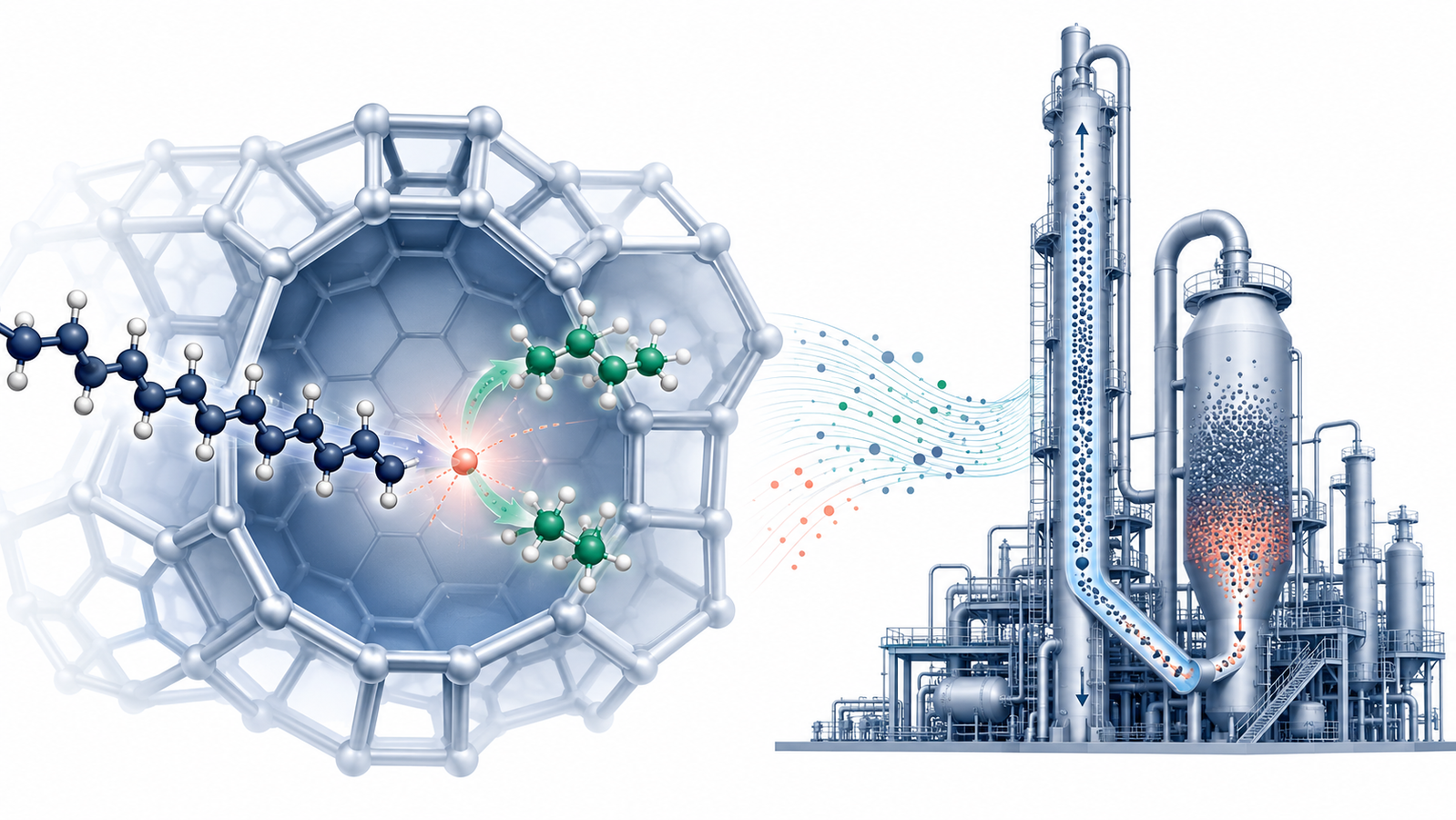
Figure 3. Cracking in the zeolite Y supercage links the molecular scale to the fluid catalytic cracking unit that produces a large share of the world's gasoline-range fuels. Adsorption and Separation
Beyond catalysis, faujasite-type zeolites are important adsorbents. The open 12-ring network and the strong electrostatic field of the exchangeable cations make NaY and NaX (zeolite 13X) benchmark materials for CO₂ capture and for gas separations, with the cation type strongly tuning capacity and selectivity.25 Much current work modifies faujasite by cation exchange, composite formation, and surface chemistry to improve CO₂ uptake, moisture tolerance, and cyclic stability for post-combustion capture.26 High-silica dealuminated Y also serves as the active component of adsorber/catalyst composites: pollutants such as halogenated hydrocarbons are first adsorbed from a liquid phase and then decomposed by oxidation, with the active sites localized on the crystal surface while the bulk remains open for adsorption.6 The same wide pores and tunable acidity also make zeolite Y useful for hydrocarbon separations and as a catalyst support.
Synthesis Directions and Sustainability
Two themes dominate current zeolite Y research. The first is accessibility: combining the intrinsic acidity of faujasite with hierarchical or hybrid architectures so that bulky, heavier feedstocks — including residues and bio-derived oxygenates — can reach the active sites.1523 The second is sustainability: reducing the organic templates, solvents, and energy used to make and modify zeolites, through organotemplate-free and solvent-free crystallizations and through more efficient stabilization that lowers rare-earth consumption.17 Together with decades of accumulated structure–property understanding,46 these directions keep zeolite Y at the center of refining and a growing range of separation and environmental applications.
Conclusion
Zeolite Y owes its industrial importance to a tightly balanced set of properties: the open faujasite framework with large supercages, strong and tunable Brønsted acidity, and the structural stability conferred by steam dealumination and rare-earth exchange. Ultrastable Y raises the Si/Al ratio and opens mesopores; REUSY pins the remaining aluminum with rare-earth cations, preserving surface area and acid sites under the repeated regenerations of fluid catalytic cracking; and hierarchical forms further improve access for bulky molecules. Together these explain why zeolite Y remains the benchmark cracking catalyst and a versatile adsorbent.
ACS Material Y-Type Products
ACS Material offers Y-type series zeolites — including ultrastable Y (USY) and rare-earth ultrastable Y (REUSY) grades — in powder and pellet forms, alongside our full range of molecular sieves. The Y-RE2 REUSY shown in Figure 2 is one example from the series.
- Y-Type Series Zeolites (NaY, USY, REUSY) — powder and pellet forms for catalysis and adsorption.
- Molecular Sieves — the full ACS Material zeolite and molecular sieve range.
Frequently Asked Questions
What is zeolite Y used for?
Its main use is as the active component of fluid catalytic cracking (FCC) catalysts in petroleum refining, where it cracks heavy gas oil into gasoline and lighter products. Its large pores, strong acidity, and stability also make it useful for adsorption, CO₂ capture, gas separation, and as a catalyst support.
What does the “Y” mean, and how is it different from zeolite X?
X and Y are the same faujasite (FAU) framework but differ in composition. Breck set the boundary at a framework Si/Al ratio of about 1.5: below it the material is zeolite X, above it zeolite Y. The higher silica content of Y makes it more acidic and far more thermally and hydrothermally stable.
How big are the pores in zeolite Y?
Zeolite Y has large supercages (about 12–13 Å across) reached through 12-membered-ring windows about 7.4 Å wide — wide enough to admit bulky branched and aromatic hydrocarbons that smaller-pore zeolites exclude.
What is ultrastable Y (USY)?
USY is zeolite Y that has been steam-dealuminated: heating ammonium-Y in steam removes aluminum from the framework, raising the Si/Al ratio, creating extra-framework aluminum and mesopores, contracting the unit cell, and greatly increasing hydrothermal stability for use in cracking.
What is REUSY, and why add rare earths?
REUSY is rare-earth ultrastable Y, exchanged with cations such as lanthanum and cerium. Because each rare-earth ion (3+) balances three framework charges and sits in the sodalite cages bridging framework oxygens, it anchors the aluminum, resists further dealumination, and improves both stability and acid-site retention — which is why it is a leading FCC catalyst.
Does steaming make zeolite Y more acidic?
Steaming increases stability and creates mesopores, but recent spectroscopy indicates it does not raise the intrinsic strength of the Brønsted sites; the total number of Brønsted sites actually decreases as extra-framework aluminum forms. The performance gains come mainly from stability, accessibility, and the interplay of framework and extra-framework species.
Why is zeolite Y preferred over zeolites like ZSM-5 for cracking?
Cracking heavy gas-oil molecules requires pores large enough for those molecules to reach the acid sites. Zeolite Y's wide 12-ring pores allow this, while medium-pore zeolites such as ZSM-5 have 10-ring channels that are too small; ZSM-5 is instead used as an additive to boost octane and light olefins such as propylene.
In what forms is zeolite Y available?
ACS Material supplies Y-type series zeolites, including USY and REUSY grades, in both powder and pellet forms for laboratory and industrial use.
References
1 D. W. Breck, “Crystalline zeolite Y,” U.S. Patent 3,130,007, 1964.2 D. W. Breck, Zeolite Molecular Sieves: Structure, Chemistry, and Use, John Wiley & Sons, New York, 1974.3 C. Baerlocher, L. B. McCusker and D. H. Olson, Atlas of Zeolite Framework Types, 6th ed., Elsevier, Amsterdam, 2007.4 A. Corma, “From microporous to mesoporous molecular sieve materials and their use in catalysis,” Chem. Rev., 1997, 97, 2373–2419. DOI: 10.1021/cr960406n5 E. T. C. Vogt and B. M. Weckhuysen, “Fluid catalytic cracking: recent developments on the grand old lady of zeolite catalysis,” Chem. Soc. Rev., 2015, 44, 7342–7370. DOI: 10.1039/c5cs00376h6 W. Lutz, “Zeolite Y: synthesis, modification, and properties—a case revisited,” Adv. Mater. Sci. Eng., 2014, 724248. DOI: 10.1155/2014/7242487 M. Boronat and A. Corma, “Factors controlling the acidity of zeolites,” Catal. Lett., 2015, 145, 162–172. DOI: 10.1007/s10562-014-1438-78 M. Boronat and A. Corma, “What is measured when measuring acidity in zeolites with probe molecules?,” ACS Catal., 2019, 9, 1539–1548. DOI: 10.1021/acscatal.8b043179 J. Pérez-Ramírez, C. H. Christensen, K. Egeblad, C. H. Christensen and J. C. Groen, “Hierarchical zeolites: enhanced utilisation of microporous crystals in catalysis by advances in materials design,” Chem. Soc. Rev., 2008, 37, 2530–2542. DOI: 10.1039/b809030k10 C. Wang, A. Brenig, J. Xu, F. Deng, V. Paunović and J. A. van Bokhoven, “Evidence of preferential aluminum site loss during reaction-induced dealumination,” J. Am. Chem. Soc., 2024, 146, 34279–34284. DOI: 10.1021/jacs.4c1321211 Y. Wei, T. E. Parmentier, K. P. de Jong and J. Zečević, “Tailoring and visualizing the pore architecture of hierarchical zeolites,” Chem. Soc. Rev., 2015, 44, 7234–7261. DOI: 10.1039/c5cs00155b12 M. Milina, S. Mitchell, P. Crivelli, D. Cooke and J. Pérez-Ramírez, “Mesopore quality determines the lifetime of hierarchically structured zeolite catalysts,” Nat. Commun., 2014, 5, 3922. DOI: 10.1038/ncomms492213 J. García-Martínez, M. Johnson, J. Valla, K. Li and J. Y. Ying, “Mesostructured zeolite Y—high hydrothermal stability and superior FCC catalytic performance,” Catal. Sci. Technol., 2012, 2, 987–994. DOI: 10.1039/c2cy00309k14 M. J. Mendoza-Castro, E. Serrano, N. Linares and J. García-Martínez, “Surfactant-templated zeolites: from thermodynamics to direct observation,” Adv. Mater. Interfaces, 2021, 8, 2001388. DOI: 10.1002/admi.20200138815 M. J. Mendoza-Castro, Z. Qie, X. Fan, N. Linares and J. García-Martínez, “Tunable hybrid zeolites prepared by partial interconversion,” Nat. Commun., 2023, 14, 921. DOI: 10.1038/s41467-023-36502-316 N. Linares, A. M. Silvestre-Albero, E. Serrano, J. Silvestre-Albero and J. García-Martínez, “Surfactant-templating of zeolites: from design to application,” Chem. Mater., 2017, 29, 8197–8208. DOI: 10.1021/acs.chemmater.7b0059917 X. Meng and F.-S. Xiao et al., “Sustainable synthesis of zeolites without addition of both organotemplates and solvents,” J. Am. Chem. Soc., 2014, 136, 2503–2510. DOI: 10.1021/ja500098j18 L. Zhang, Y. Qin, X. Zhang, X. Gao and L. Song, “Further findings on the stabilization mechanism among modified Y zeolite with different rare earth ions,” Ind. Eng. Chem. Res., 2019, 58, 14016–14025. DOI: 10.1021/acs.iecr.9b0303619 N. Linares, E. Serrano and J. García-Martínez et al., “Micelle formation inside zeolites: a critical step in zeolite surfactant-templating observed by Raman microspectroscopy,” ACS Mater. Lett., 2021, 3, 1698–1704. DOI: 10.1021/acsmaterialslett.1c0051420 S. van Donk, A. H. Janssen, J. H. Bitter and K. P. de Jong, “Generation, characterization, and impact of mesopores in zeolite catalysts,” Catal. Rev. Sci. Eng., 2003, 45, 297–319. DOI: 10.1081/CR-12002390821 J. Scherzer and J. L. Bass, “Infrared spectra of ultrastable zeolites derived from type Y zeolites,” J. Catal., 1977, 46, 100–108.22 P. Liu, Y. Cui, J. Wang, X. Du, H. Zhang, A. Humphries, M. Jia and J. Yu, “Structure stabilization of zeolite Y induced by yttrium and its role in promoting n-docosane conversion,” Microporous Mesoporous Mater., 2021, 323, 111225. DOI: 10.1016/j.micromeso.2021.11122523 M. Rutkowska and L. Chmielarz, “Application of mesoporous/hierarchical zeolites as catalysts for the conversion of nitrogen pollutants: a review,” Catalysts, 2024, 14, 290. DOI: 10.3390/catal1405029024 X. Pu, N. Liu and L. Shi, “Acid properties and catalysis of USY zeolite with different extra-framework aluminum concentration,” Microporous Mesoporous Mater., 2015, 201, 17–23. DOI: 10.1016/j.micromeso.2014.08.05625 K. S. Walton, M. B. Abney and M. D. LeVan, “CO₂ adsorption in Y and X zeolites modified by alkali metal cation exchange,” Microporous Mesoporous Mater., 2006, 91, 78–84. DOI: 10.1016/j.micromeso.2005.11.02326 V. R. C. M. Barbalho, P. V. S. Badolato, C. Detoni and M. M. V. M. Souza, “CO₂ adsorption in 13X zeolite modified by alkaline earth cation exchange,” Microporous Mesoporous Mater., 2025, 398, 113806. DOI: 10.1016/j.micromeso.2025.11380627 T. F. Degnan, “Applications of zeolites in petroleum refining,” Top. Catal., 2000, 13, 349–356. DOI: 10.1023/A:100905490513728 C. Martínez and A. Corma, “Inorganic molecular sieves: preparation, modification and industrial application in catalytic processes,” Coord. Chem. Rev., 2011, 255, 1558–1580. DOI: 10.1016/j.ccr.2011.03.01429 A. F. Masters and T. Maschmeyer, “Zeolites—from curiosity to cornerstone,” Microporous Mesoporous Mater., 2011, 142, 423–438.30 J. W. Ward, “The nature of active sites on zeolites: thermal decomposition of ammonium Y zeolite,” J. Catal., 1972, 27, 157–161.31 G. T. Kerr, “Chemistry of crystalline aluminosilicates: the preparation and properties of ultrastable hydrogen zeolite Y,” J. Phys. Chem., 1967, 71, 4155–4156.32 K. Khivantsev, N. R. Jaegers, L. Kovarik, M. A. Derewinski, J.-H. Kwak and J. Szanyi, “On the nature of extra-framework aluminum species and improved catalytic properties in steamed zeolites,” Molecules, 2022, 27, 2352. DOI: 10.3390/molecules27072352