-
Graphene Nanoplatelets for BPA Sensing - Ubon Ratchathani University, 2019
Jul 10, 2026 | ACS MATERIAL LLCButmee, P. et al. (2019). A direct and sensitive electrochemical sensing platform based on ionic liquid functionalized graphene nanoplatelets for the detection of bisphenol A. *Journal of Electroanalytical Chemistry*. https://doi.org/10.1016/j.jelechem.2018.12.014
Journal of Electroanalytical Chemistry · 2019
Researchers at Ubon Ratchathani University built an ionic liquid–graphene nanoplatelet electrochemical sensor that detects bisphenol A down to 6.4 nM.
About this research
Researchers at Ubon Ratchathani University developed a sensitive electrochemical sensor for bisphenol A (BPA) using graphene nanoplatelets (GNPs, 2–10 nm thickness) purchased from ACS Material combined with 1-butyl-2,3-dimethylimidazolium tetrafluoroborate ionic liquid (IL) as a modifier for glassy carbon paste electrodes (GCPEs). The resulting IL-GNP/GCPE delivered a detection limit of 6.4 nM, a linear range from 0.02 to 5.0 µM, and successful application to BPA quantification in drinking water and commercial plastic samples, with recoveries between 95.3% and 104.5% that matched a standard HPLC method. The work was published in the Journal of Electroanalytical Chemistry in 2019 by a team spanning Thailand, Serbia, and Austria.
Bisphenol A is a widely used monomer in polycarbonate plastics and epoxy resins, and is known to migrate from food and beverage packaging into drinking water and foodstuffs. Because BPA is an endocrine disruptor that mimics estrogen, the European Food Safety Authority has set a tolerable daily intake at the microgram level, driving demand for sensitive, low-cost field-deployable detection methods. Traditional approaches such as gas chromatography, liquid chromatography, immunoassays, and chemiluminescence offer good performance but require expensive instruments and sample handling. Electrochemical sensors are attractive for routine BPA monitoring because they combine fast response, low instrument cost, and the potential for portable operation, provided that the electrode surface is engineered to overcome the sluggish direct oxidation of phenolic BPA.
The ACS Material graphene nanoplatelets played the central role in the sensing platform. The authors first dispersed GNPs in N,N-dimethylformamide at 1.0 mg/mL by ultrasonication for two hours, then added 20 µL of the imidazolium tetrafluoroborate ionic liquid and sonicated for another 30 minutes. The mixture was centrifuged at 10,000 rpm and the residue redispersed in 500 µL of DMF. Seven microliters of this IL-GNP composite was drop-cast onto the polished surface of a glassy carbon paste electrode (1 cm diameter, 0.5 cm depth) and dried at room temperature. SEM imaging confirmed that the modified surface presented thin wrinkled sheet-like layers, while AFM showed a reduction in surface roughness (Rq) from 1.15 µm on the bare GCPE to 0.87 µm after coating. FTIR confirmed the chemical association between the ionic liquid and the residual oxygen-containing groups of the graphene nanoplatelets, indicating successful composite formation through a combination of intercalation, surface adsorption, and chemical interaction.
The analytical performance of the IL-GNP/GCPE was characterized by cyclic voltammetry, electrochemical impedance spectroscopy, and differential pulse voltammetry in phosphate buffer at pH 8.0. The charge transfer resistance dropped from 3.14 kΩ on bare GCPE to 0.53 kΩ on the IL-GNP/GCPE, a six-fold improvement that reflects the synergistic effect of the ionic liquid's ion-exchange capability and the GNPs' rapid electron transfer. Cyclic voltammetry produced well-defined redox peaks with a peak-to-peak separation of only 0.12 V. Under optimized DPV conditions (pulse 75 mV, step 30 mV, scan rate 50 mV/s), the sensor produced a linear calibration of I [µA/cm²] = 6.25 C [µM] + 0.734 with r² = 0.990 over 0.02–5.0 µM BPA, a sensitivity of 6.25 µA·µM⁻¹·cm⁻², and a detection limit of 6.4 nM with a quantification limit of 0.02 µM. Repeatability (RSD 3.3% over five measurements) and reproducibility (RSD 3.8% over five sensors) were both acceptable, and 80% of the original signal was retained after two weeks of storage at 4 °C. Common interferents such as phenol, 1-naphthol, 4-nitrophenol, glucose, sucrose, and a panel of inorganic cations at 100-fold excess did not significantly affect the BPA signal.
The practical relevance of this work lies in food contact materials and environmental monitoring. The sensor was validated on three commercial drinking water bottles made from polyethylene terephthalate and polyethylene, and on water that had been in contact with these plastics. Recoveries ranged from 95.3% to 104.5%, and a paired t-test at the 95% confidence level showed no statistically significant difference between the IL-GNP/GCPE results and parallel HPLC measurements. The combination of low detection limit, broad linear range, and low-cost electrode preparation positions this platform as a candidate for routine BPA screening in bottled water, packaging migration tests, and other regulatory contexts. The authors note potential extension to other phenolic pollutants and endocrine disruptors that benefit from π–π adsorption on graphene-based surfaces.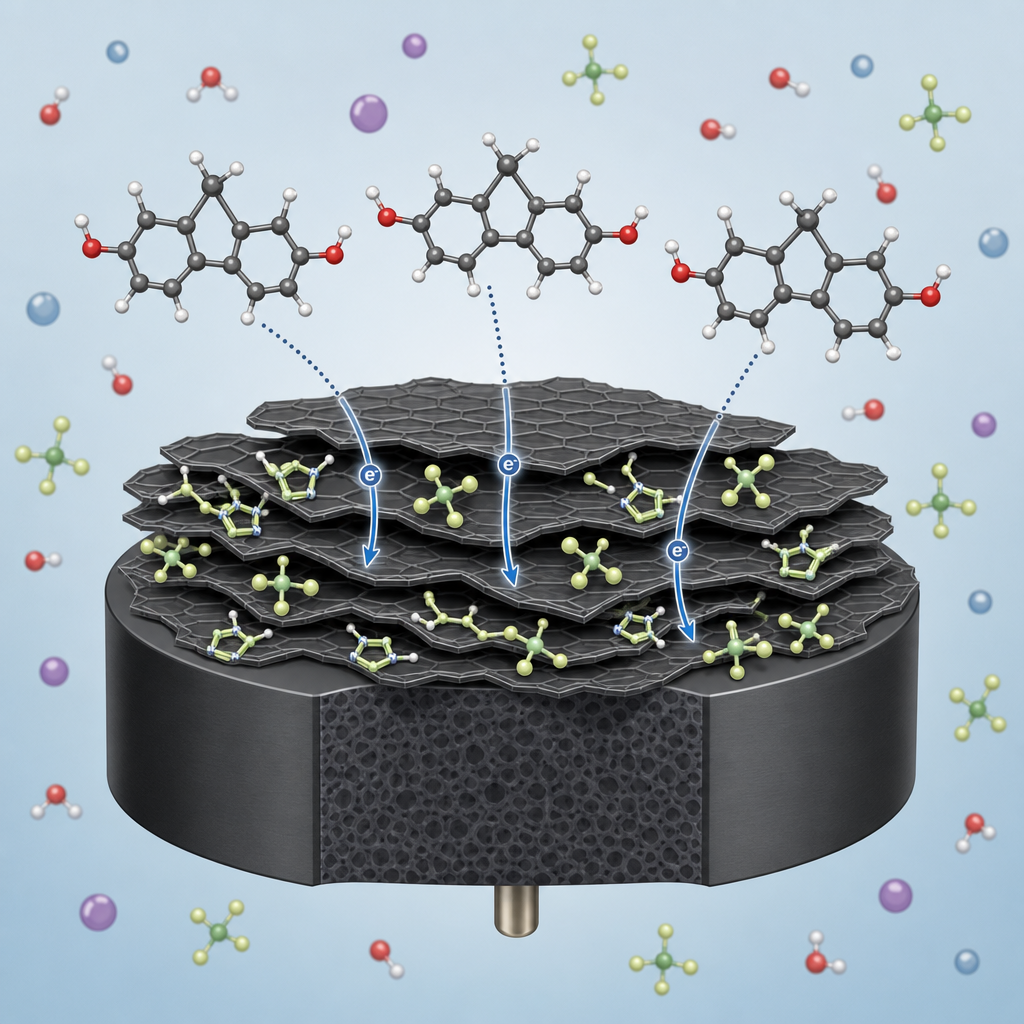
For researchers building electrochemical sensors, the study highlights how the morphology and electronic properties of commercial graphene nanoplatelets can be leveraged together with an ionic liquid to overcome the aggregation that often limits practical graphene electrodes. ACS Material supplies graphene nanoplatelets of varied thickness, including the 2–10 nm grade used here, as well as related materials such as reduced graphene oxide and functionalized graphenes that may be relevant to teams working on BPA detection, phenolic compound analysis, or other electroanalytical applications requiring rapid electron transfer and a high specific surface area.How ACS Material products were used
- Graphene Nanoplatelets (2-10nm) (Graphene Series) — “Graphene nanoplatelets (2-10 nm thickness) were purchased from Advanced Chemicals Supplier (ACS Material, Medford, USA).”
Product Performance in this Study
The graphene nanoplatelets, combined with an ionic liquid, served as the key electrode modifier that dramatically improved electron transfer (Rct dropped from 3.14 kΩ to 0.53 kΩ) and yielded a sensitive BPA sensor with a 6.4 nM detection limit.
Related product categories
Frequently asked questions
How do graphene nanoplatelets improve bisphenol A electrochemical detection?
Graphene nanoplatelets provide a high specific surface area, rapid electron transfer, and π-interaction sites that promote adsorption of phenolic BPA molecules. In this study, combining 2–10 nm graphene nanoplatelets from ACS Material with an imidazolium ionic liquid lowered the charge transfer resistance of a glassy carbon paste electrode from 3.14 kΩ to 0.53 kΩ and approximately doubled the DPV oxidation current, yielding a 6.4 nM detection limit for BPA.
Why combine an ionic liquid with graphene nanoplatelets for sensor electrodes?
Graphene nanoplatelets tend to aggregate through van der Waals forces, which reduces their effective surface area. Imidazolium ionic liquids introduce a surface charge that stabilizes the platelet dispersion and adds high ionic conductivity, a wide electrochemical window, and good chemical stability. The synergistic IL-GNP composite produces a smoother, more conductive electrode coating with stronger and better-defined redox peaks than either modifier alone.
What detection limit and linear range did the IL-GNP sensor achieve for BPA?
Under optimized differential pulse voltammetry conditions in pH 8.0 phosphate buffer, the IL-GNP/GCPE sensor showed a linear response from 0.02 to 5.0 µM BPA with a sensitivity of 6.25 µA·µM⁻¹·cm⁻². The detection limit was 6.4 nM and the quantification limit was 0.02 µM. Recoveries from spiked plastic and bottled-water samples ranged from 95.3% to 104.5%, agreeing with HPLC reference measurements.