
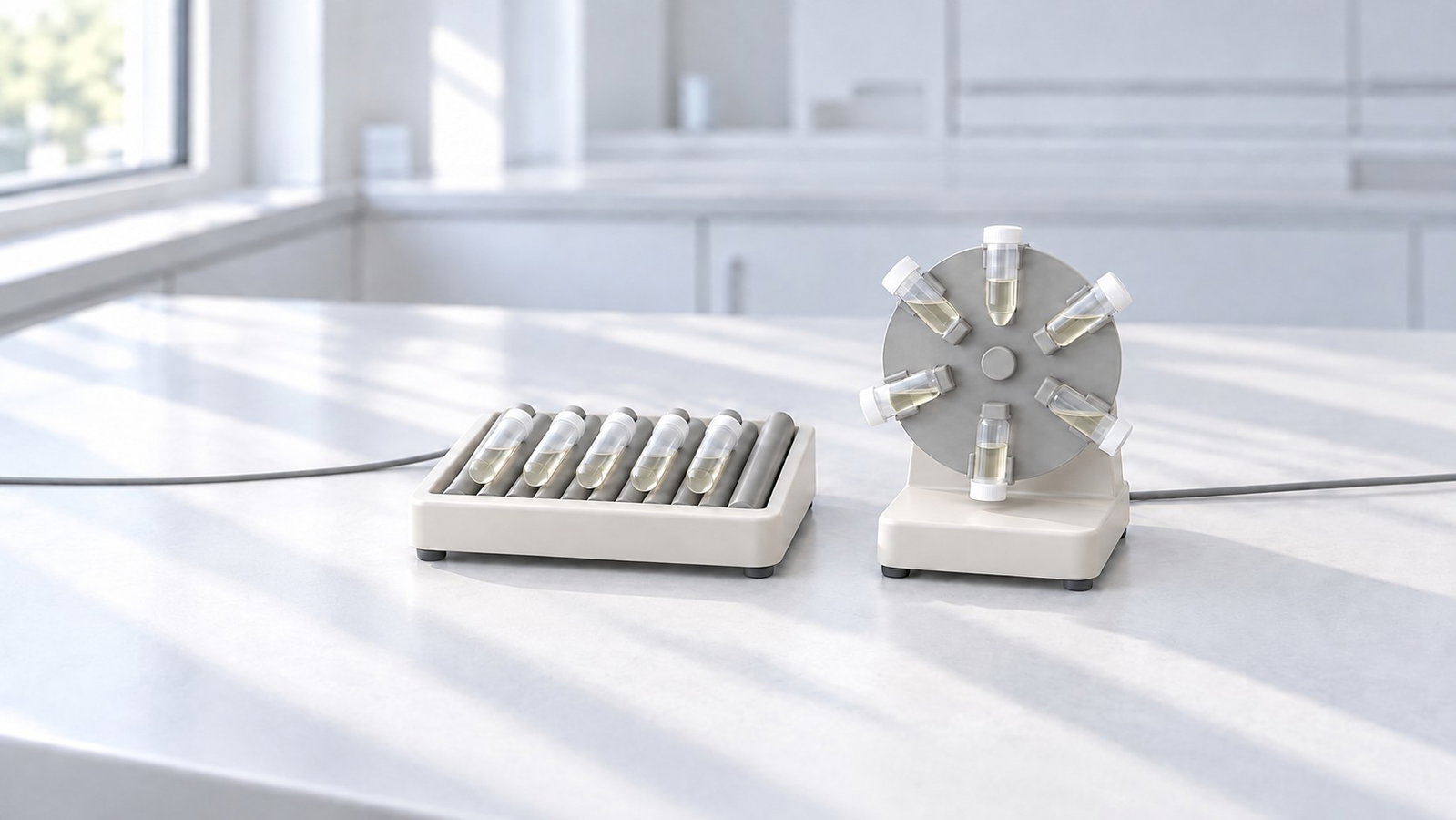
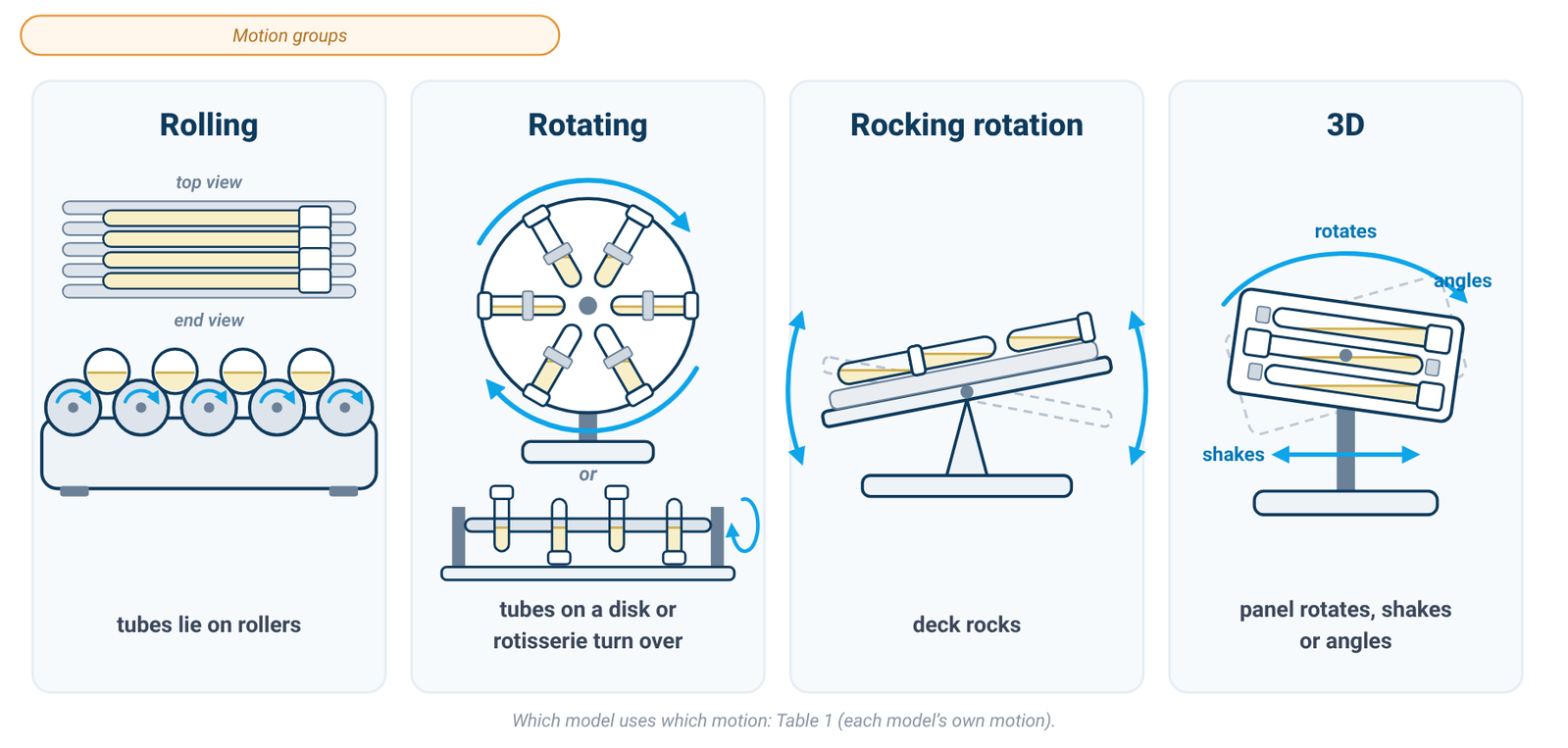
Tube roller vs tube rotator is really a question about motion. A tube roller mixer lays capped tubes on a set of turning rollers, so each tube rolls on its side. A tube rotator holds tubes on a disk or a rotisserie and carries them over and over. Two related designs complete the picture: a rocking rotator rocks a deck of tubes, and a 3D rotating mixer rotates, shakes or angles a panel of tube clamps. All four keep closed tubes in repeated motion, but they hold tubes in different ways, so speed figures should be read within the motion type rather than compared across them. This guide explains each motion, then sets eleven ALab™ tube mixers side by side using only ACS Material's specifications: tube holders, speeds, timers and the model-by-model statements about cold rooms and incubators. Everything here is written for research laboratory use. For the wider picture, see our guide to laboratory mixing methods.
Quick answer: A tube roller rolls tubes that lie on driven rollers. A tube rotator turns tubes over on a disk or rotisserie. A rocking rotator rocks a deck, and a 3D mixer rotates, shakes or angles a clamp panel. Choose by how your tubes need to be held, whether you need a timer, and whether ACS Material lists cold-room or incubator use for the model, not by comparing rpm figures across different motions.
1. Tube Roller vs Tube Rotator at a Glance
The eleven products fall into four motion groups. Table 1 keeps each value under ACS Material's own label for that model, so read each value in its own terms rather than on one shared scale.
Table 1. Eleven ALab™ tube mixers, grouped by motion
| Group | Model | Product type | Motion / geometry (label: value) | Tubes / holder | Speed range | Speed display | Timer (operation mode) | Cold room / incubator |
|---|---|---|---|---|---|---|---|---|
| Tube roller | MX-T6-Pro | LCD digital tube roller | Rocking motion: Rocking and rolling; Amplitude: 24 mm | Max. load capacity: 4 kg; Number of rollers: 6; Roller size [length]: 280 mm | 10–70 rpm | LCD | Time setting range: 1–1199 min (Operation mode: Continuous/timer) | "Cold room and incubator compatible." |
| Tube roller | MX-T6-ProE | LCD digital tube roller | Rocking motion: Rocking and rolling; Amplitude: 24 mm | Max. load capacity: 4 kg; Number of rollers: 6; Roller size [length]: 280 mm | 10–70 rpm | LCD | Time setting range: 1–1199 min (Operation mode: Continuous/timer) | "Cold room and incubator compatible." |
| Tube roller | MX-T6-S+ | Standard tube roller | Rocking motion: Rocking and rolling; Amplitude: 24 mm | Max. load capacity: 4 kg; Number of rollers: 6; Roller size [length]: 280 mm | 0–70 rpm | Scale | — (Operation mode: Continuous) | — |
| Tube roller | MX-T6-S | Standard tube roller | Rocking motion: Rocking and rolling; Amplitude: 24 mm | Max. load capacity: 4 kg; Number of rollers: 6; Roller size [length]: 280 mm | 0–70 rpm | Scale | — (Operation mode: Continuous) | — |
| Tube roller | MX-T6-SE | Standard tube roller | Rocking motion: Rocking and rolling; Amplitude: 24 mm | Max. load capacity: 4 kg; Number of rollers: 6; Roller size [length]: 280 mm | 0–70 rpm | Scale | — (Operation mode: Continuous) | — |
| Tube rotator (disk) | MX-RD-Pro | LCD digital tube rotator | "Circular rotating action"; Tilt angle: 0–90° | "Disk Accessories Type-1 to Type-3 for 1.5 mL × 60, 15 mL × 16 and 50 mL × 8 centrifuge tubes" | 10–70 rpm | LCD | Timer: 1–1199 min (Operation mode: Continuous / timer) | — |
| Tube rotator (disk) | MX-RD-E | Laboratory tube rotator | — | "Plastic clips for 50 mL, 15 mL and 1.5 mL" | 0–80 rpm | Scale | — (Operation mode: Continuous) | — |
| Horizontal tube rotator (rotisserie) | MX-RL-Pro | LCD digital tube rotator, horizontal | — | "for 1.5 mL, 15 mL and 50 mL centrifuge tubes held horizontally or vertically" | 10–70 rpm | LCD | Timer: 1–1199 min (Operation mode: Continuous / timer) | "Can be used in cold rooms or incubators." |
| Horizontal tube rotator (rotisserie) | MX-RL-E | Economical rotator | — | "Plastic clips for 50 mL, 15 mL and 1.5 mL" | 0–80 rpm | Scale | — (Operation mode: Continuous) | "Not recommended for extended use in incubators or cold rooms." |
| Rocking rotator | SK-R30S-E | Short deck rocking rotator | Tilt angle: 30 ± 3° | Load capacity: 1 kg; mattresses for "10 × 5–10 mL blood collection tubes" or "4 × 50 mL test tubes" | 0–30 rpm * | — | — (Operation mode: Continuous) | — |
| Rocking rotator | SK-R30L-E | Long deck rocking rotator | Tilt angle: 30 ± 3° | Load capacity: 1 kg; mattresses for "16 × 5–10 mL blood collection tubes" or "6 × 50 mL test tubes" | 0–30 rpm * | — | — (Operation mode: Continuous) | — |
| Rocking rotator | SK-R30D-E | Long deck double layer rocking rotator | Tilt angle: 40 ± 3° | Load capacity: 1 kg; mattresses for "16 × 5–10 mL blood collection tubes" or "6 × 50 mL test tubes" | 0–30 rpm * | — | — (Operation mode: Continuous) | — |
| 3D rotating mixer | TM40 | 3D rotating mixer | Movement mode: Rotation/Shake/Angle; Oscillation amplitude: 20–99° | Application tubes: 0.5/1.5/2/5/7/10/15/50 mL | 10–40 rpm * | Display: LED | Timing range: 1–999 min / 0–999 s (Working mode: Continuous/Timed) | "can be used in laboratory benches, cold storage or incubators" |
Source: ACS Material product specifications (October 2026); holders are optional accessories where listed. A dash means the specification is not listed, not that the feature is absent. * On the SK-R30 and TM40 (rocking and 3D motion), the specified rpm is treated as motion cycles per minute; do not compare it with roller or rotator rpm. Amplitude, tilt and oscillation values are labels for different motions and are not converted into one another. A scale display is a dial position, not an rpm readout.
2. Why Closed Tubes Are Mixed Slowly and Continuously
Some suspended particles settle when left still. Sedimentation takes place when "particles in suspension settle out of the fluid in which they are entrained and come to rest against a barrier" [1], and Stokes's law is the classic description of the "settling of fine particles in water or other fluids" [2]. Continuous tube motion can be used where a protocol calls for material to remain in motion during an incubation; these sedimentation sources do not establish one required speed or run pattern for every sample.
Protein formulations can be sensitive to shaking conditions, and air in the container can matter. In a study of an antibody formulation shaken in vials, "The headspace in the vials had great influence on the stability of the protein formulation when stressed by shaking." [3] That study supports treating agitation conditions as sample-dependent; it does not establish a universal roller or rotator setting.
For biosafety, the WHO laboratory biosafety manual advises: "Use sealed containers, such as screw-capped tubes." [4] The same manual lists "over-vigorous mixing" among the habits that create aerosols and droplets [4]. Keep tubes closed during mixing unless the applicable procedure requires otherwise.
3. How a Tube Roller Mixes: the MX-T6 Family
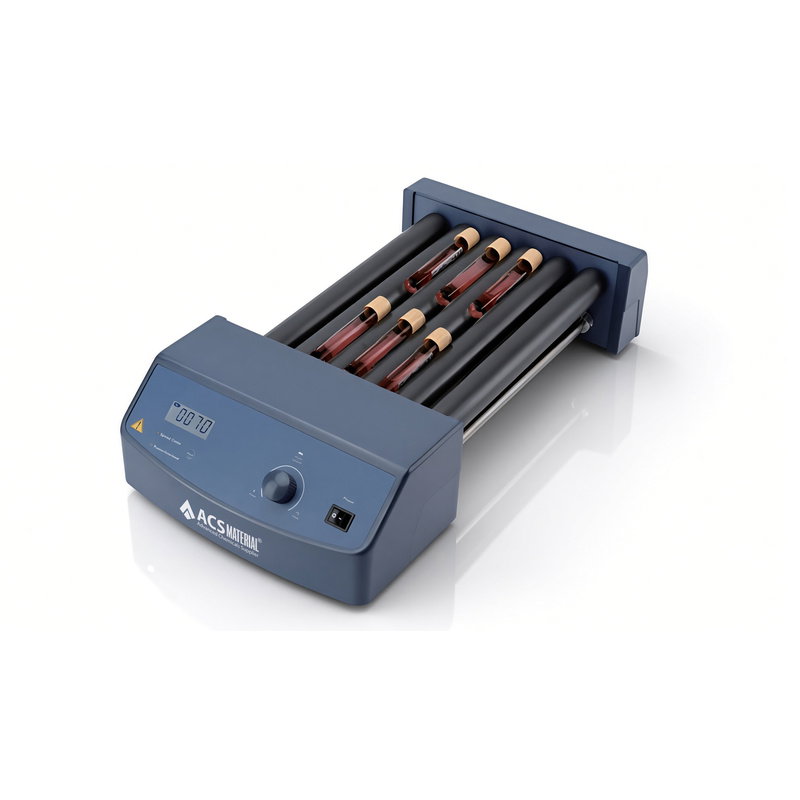
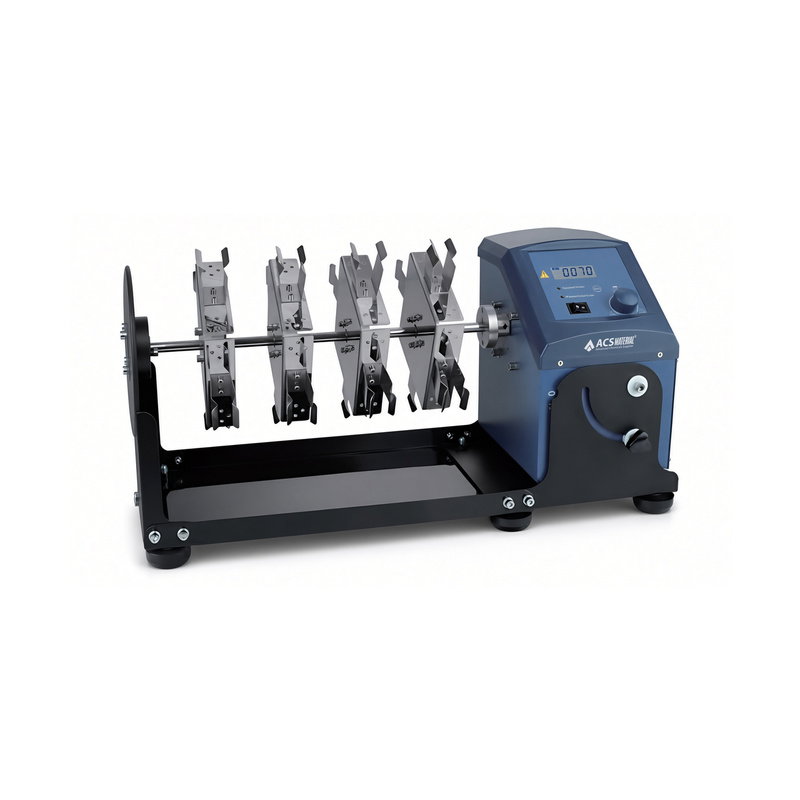
A tube roller has a set of parallel rollers that turn together. Capped tubes lie on their sides between neighbouring rollers and turn as the rollers turn, so the liquid runs along the tube wall and back again. For the MX-T6 models discussed below, no clamps or tube holders are listed; the rollers and load limit are specified instead. In laboratory protocols, rollers appear for slow jobs such as dissolving a solid. One protocol notes that "The use of a tube roller or orbital shaker may aid with solubilization." [5]
The ALab™ MX-T6 family is the tube roller group in this comparison. All five models list the same six-roller unit: "Number of rollers: 6", "Roller size [length]: 280 mm" and "Max. load capacity: 4 kg". The MX-T6-Pro has a "Six roller design for gentle and efficient rolling, and easy to clean". Each model also lists the label "Rocking motion: Rocking and rolling" and "Amplitude: 24 mm". This guide quotes both exactly and does not interpret them. No tube holders or tube counts are listed, so the rollers and the load limit are what you plan around. Among their listed uses, the MX-T6 models include "mixing blood samples"; this guide stays with research-use mixing of closed tubes and does not repeat the other application claims.
3a. MX-T6-Pro and MX-T6-ProE: LCD and Timer
The MX-T6-Pro LCD digital tube roller and the MX-T6-ProE LCD digital tube roller share the same control specifications: "Speed range: 10–70 rpm", "Speed display: LCD", "Time setting range: 1–1199 min" and "Operation mode: Continuous/timer". In ACS Material's words for the MX-T6-Pro, "LCD displays the speed and time; timer with a time setting range of 1–1199 min and a continuous/timer operation mode."
The specified difference between them is the motor. The MX-T6-Pro has a "Brushless DC motor", and the MX-T6-ProE a "DC motor". Both are specified as "Cold room and incubator compatible."
3b. MX-T6-S+, MX-T6-S and MX-T6-SE: Scale and Continuous
The three standard tube rollers list a scale speed display and Continuous operation. The MX-T6-S+ standard tube roller, the MX-T6-S standard tube roller and the MX-T6-SE standard tube roller list "Speed range: 0–70 rpm", "Speed display: Scale" and "Operation mode: Continuous". A scale shows a dial position, not an rpm readout. No timer is listed for these models.
The motors differ: "Brushless DC motor" on the MX-T6-S+, "Brush DC motor" on the MX-T6-S and "DC motor" on the MX-T6-SE. ACS Material is open about how close the first two are: the MX-T6-S has a brush DC motor, and all its other specifications are the same. No cold-room or incubator use is specified for the three.
4. How a Tube Rotator Mixes: MX-RD Disk Rotators
A tube rotator clamps tubes to a disk or wheel that turns, so each tube is carried over and the liquid falls from one end to the other. Molecular biology protocols often call this an "end-over-end rotator" and use it for long incubations in capped tubes. One protocol, for example, says: "Incubate overnight at 4 °C on an end-over-end rotator." [6] A third protocol mixes gel pieces with buffer "on the spinning wheel or during end-over-end rotation" [7]. These protocols describe their own conditions and equipment; none of them tested an instrument in this article.
The ALab™ MX-RD models are disk rotators. The MX-RD-Pro LCD digital tube rotator has a "Circular rotating action, gives gentle but effective mixing of biological samples in 1.5 mL to 50 mL micro tubes." It adds: "Adjustable angle from 0 to 90°." Its specification reads "Tilt angle: 0–90°". Its controls are "Speed range: 10–70 rpm", an LCD display, "Timer: 1–1199 min" and "Operation mode: Continuous / timer", with a "Brushless DC motor". The disks are optional accessories: "Disk Accessories Type-1 to Type-3 for 1.5 mL × 60, 15 mL × 16 and 50 mL × 8 centrifuge tubes, and disk support rods (4 pcs in a group)." ACS Material does not use the term end-over-end for it, and no cold-room or incubator statement is made.
The MX-RD-E laboratory tube rotator is the scale version, with "Speed range: 0–80 rpm", "Speed display: Scale", "Operation mode: Continuous" and "Motor type: DC motor". It offers "A gentle but effective mixing of biological samples in 1.5 mL to 50 mL micro tubes." and lists "Plastic clips for 50 mL, 15 mL and 1.5 mL, used with the MX-RL-E/MX-RD-E disk/rotisserie accessory." No tilt angle, timer or cold-room or incubator statement is listed.
5. Horizontal Tube Rotators: MX-RL-Pro and MX-RL-E
A horizontal tube rotator, also called a rotisserie rotator, turns a long horizontal holder like a spit, so the tubes along it are carried round together. The MX-RL-Pro LCD digital horizontal tube rotator "Provides gentle but effective rolling and mixing of biological samples in 1.5 mL to 50 mL micro tubes." Its rotisserie accessories are "for 1.5 mL, 15 mL and 50 mL centrifuge tubes held horizontally or vertically". Type-1 to Type-3 hold 1.5 mL × 48, 15 mL × 24 or 50 mL × 24 tubes horizontally, and Type-4 to Type-6 hold 1.5 mL × 32, 15 mL × 16 or 50 mL × 16 tubes vertically. The control specifications match the MX-RD-Pro: 10–70 rpm, LCD display, a 1–1199 min timer and a brushless DC motor. On location, ACS Material says: "Can be used in cold rooms or incubators."
The MX-RL-E economical rotator is "A rotisserie horizontal tube rotator with a scale speed display." It offers "Slow to vigorous mixing of your biological samples and solutions." and "Provides gentle but effective rolling of your tubes." The specifications are "Speed range: 0–80 rpm", "Speed display: Scale", "Operation mode: Continuous" and "Motor type: DC motor", and it uses the same "Plastic clips for 50 mL, 15 mL and 1.5 mL" as the MX-RD-E. On location, ACS Material is explicit: "Not recommended for extended use in incubators or cold rooms."
6. Rocking Rotators: SK-R30 Short, Long and Double-Layer Decks
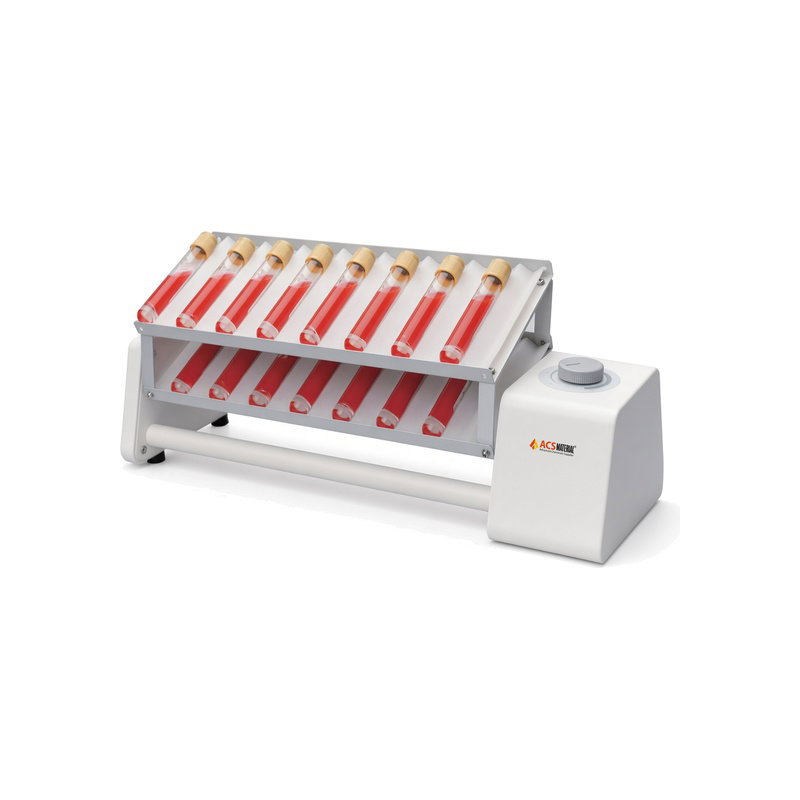
A rocking rotator is a third design, neither a roller nor a disk or rotisserie rotator. The tubes lie in a mattress on a deck, and the deck rocks. The SK-R30 rocking rotator comes in three models: "SK-R30S-E short deck, SK-R30L-E long deck, SK-R30D-E long deck with a double layer." The tilt angle is 30 ± 3° on the SK-R30S-E and SK-R30L-E and 40 ± 3° on the SK-R30D-E. ACS Material also says: "All three models have a brushless DC motor, a continuous mode of operation and a speed range of 0–30 rpm". On a rocking rotator, the specified rpm is treated as motion cycles per minute; do not compare it with the rpm of a roller or rotator. ACS Material gives a "Load capacity of 1 kg on all three models".
ACS Material lists "Four optional silicone mattresses for blood collection tubes or 50 mL test tubes, by deck length." The long decks take 16 × 5–10 mL blood collection tubes or 6 × 50 mL test tubes; the short deck takes 10 × 5–10 mL blood collection tubes or 4 × 50 mL test tubes. Here, blood collection tubes simply names a tube format. No timer, speed display or cold-room or incubator statement is listed.
7. The 3D Rotating Mixer: TM40
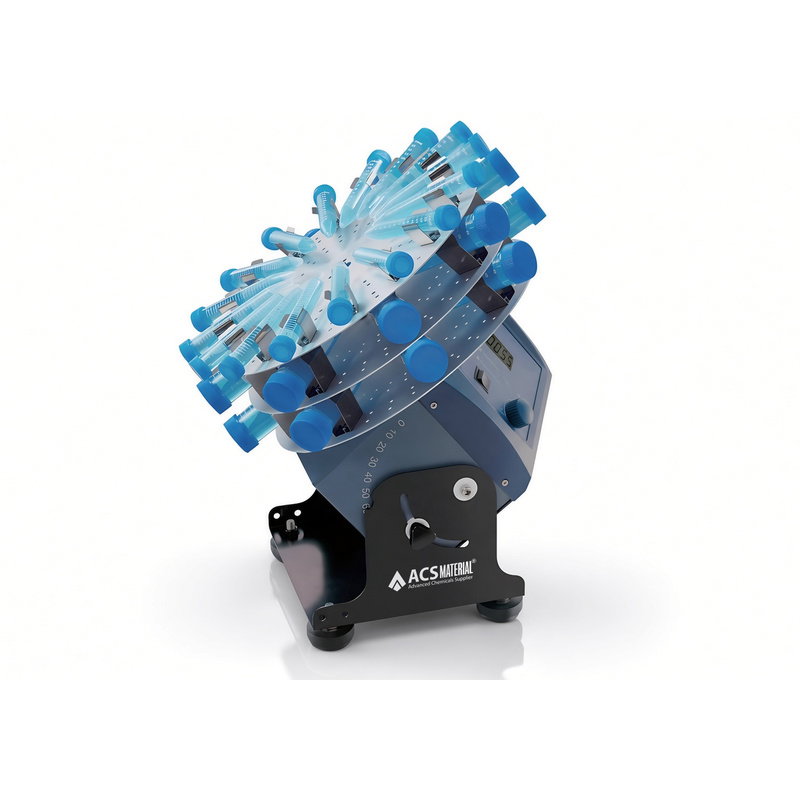
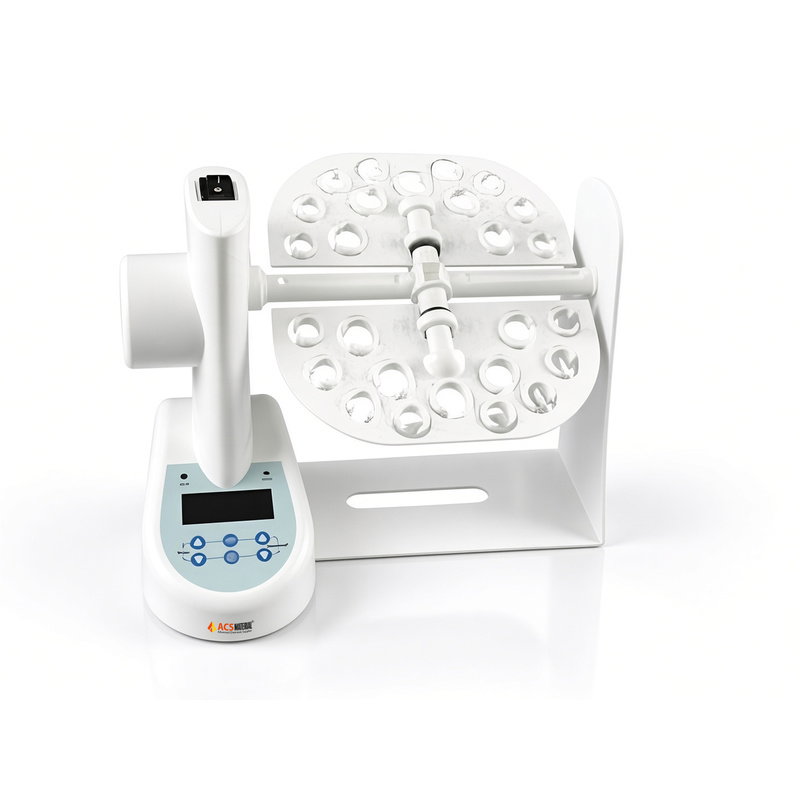
The TM40 3D rotating mixer moves a panel of tube clamps in more than one way. ACS Material says: "Through the adjustment of the rotating panel, the product can be rotated horizontally or vertically or at any angle; oscillation amplitude 20–99°." It continues: "Rotation mixing, shaking mixing and angle mixing can be switched; movement mode Rotation/Shake/Angle at 10–40 rpm." As with the SK-R30, the specified rpm is treated as motion cycles per minute and is not compared with roller or rotator speeds.
The TM40 has "Working mode: Continuous/Timed", "Timing range: 1–999 min / 0–999 s" and "Display: LED"; ACS Material adds that "when the instrument is turned on, it displays the last speed/angle setting value". Its clamps cover "application tubes 0.5/1.5/2/5/7/10/15/50 mL", and "The two clamps on the rotating panel can be adjusted independently, so that two different methods can be used in one mixing." On location, ACS Material says it "can be used in laboratory benches, cold storage or incubators". No motor type is specified.
8. Choosing Between a Roller, a Rotator, a Rocking Rotator and a 3D Mixer
Start from the tube and the run, not from the speed figures. Table 2 lists which models specify each feature.
Table 2. Which models specify what
| Need | Models | Description |
|---|---|---|
| Tubes rest on rollers; no holder listed | MX-T6-Pro, MX-T6-ProE, MX-T6-S+, MX-T6-S, MX-T6-SE | "Number of rollers: 6"; "Max. load capacity: 4 kg" |
| Disk holders for 1.5, 15 and 50 mL tubes | MX-RD-Pro | "1.5 mL × 60, 15 mL × 16 and 50 mL × 8 centrifuge tubes" |
| Rotisserie holders, tubes horizontal or vertical | MX-RL-Pro | "held horizontally or vertically" |
| Plastic clips for 50, 15 and 1.5 mL tubes | MX-RD-E, MX-RL-E | "Plastic clips for 50 mL, 15 mL and 1.5 mL" |
| Silicone mattresses on a rocking deck | SK-R30 (S-E, L-E, D-E) | "silicone mattresses for blood collection tubes or 50 mL test tubes" |
| Tube clamps for the listed application-tube sizes | TM40 | "0.5/1.5/2/5/7/10/15/50 mL" |
| Adjustable tube angle | MX-RD-Pro, TM40 | "Tilt angle: 0–90°"; "at any angle" |
| Timer | MX-T6-Pro, MX-T6-ProE, MX-RD-Pro, MX-RL-Pro, TM40 | "Time setting range: 1–1199 min"; "Timer: 1–1199 min"; "Timing range: 1–999 min / 0–999 s" |
| LCD speed display | MX-T6-Pro, MX-T6-ProE, MX-RD-Pro, MX-RL-Pro | "Speed display: LCD" (TM40: "Display: LED") |
| Scale speed display, continuous operation | MX-T6-S+, MX-T6-S, MX-T6-SE, MX-RD-E, MX-RL-E | "Speed display: Scale"; "Operation mode: Continuous" |
| Cold room / incubator use listed | MX-T6-Pro, MX-T6-ProE, MX-RL-Pro, TM40 | see Section 9; MX-RL-E: "Not recommended for extended use in incubators or cold rooms." |
Source: ACS Material product specifications (October 2026). A model missing from a feature means that feature is not listed for it. The features describe holders and controls only; they do not rank the motions.
In practice, the choice usually comes down to a few questions:
- Tubes resting directly on rollers: a tube roller. The MX-T6 models list no tube holders or tube-size capacity, only the rollers and a "Max. load capacity: 4 kg".
- Listed disk or rotisserie holders for specific tube sizes: the MX-RD or MX-RL models, using only the holders or clips listed for them.
- Tubes at a set angle: the MX-RD-Pro, with its listed tilt angle, or the TM40, whose panel can be set "at any angle".
- Blood collection tubes or 50 mL test tubes lying on a deck: the SK-R30 mattresses, sized by deck.
- Two methods in one run, or the listed application-tube sizes in clamps: the TM40.
- A timer plus an LCD or LED display: the MX-T6-Pro, MX-T6-ProE, MX-RD-Pro, MX-RL-Pro or TM40. The scale models run continuously.
No motion is ranked above another here. The rpm, amplitude and tilt values sit under different labels for different motions, so they do not rank the motions or tell you how a given sample will respond. A short pilot run with your own tubes, caps and volumes will.
9. Cold Rooms and Incubators: Model by Model
One cited protocol uses an overnight 4 °C end-over-end incubation [6], but cold-room or incubator use is a per-model statement by ACS Material, not a property of a motion type or a series.
- Listed: the MX-T6-Pro and MX-T6-ProE ("Cold room and incubator compatible."), the MX-RL-Pro ("Can be used in cold rooms or incubators.") and the TM40 ("can be used in laboratory benches, cold storage or incubators").
- Not recommended for extended use: the MX-RL-E ("Not recommended for extended use in incubators or cold rooms.").
- Not listed: the MX-T6-S+, MX-T6-S, MX-T6-SE, MX-RD-Pro, MX-RD-E and the three SK-R30 models. ACS Material does not say, so this guide does not either. Ask ACS Material before you plan a cold-room or incubator run with one of them.
10. Good Practice with Closed Tubes
These points apply to any roller, rotator or 3D mixer:
- Cap firmly. For long rotations, one protocol recommends "screw cap microcentrifuge tubes with O-rings to prevent loss of antibody solution" [8]; more generally, use sealed containers [4].
- Stay within the specified limits. Keep to the load capacity (the rollers' 4 kg, the SK-R30's 1 kg) and to the holders, clips, mattresses or clamps listed for your tube size.
- Load according to the operating instructions. Use the holder, clip, mattress or clamp listed for the tube format.
- Set speed for the sample and method. If the protocol does not specify a setting, use a pilot run rather than inferring performance from rpm alone.
- Time the run. Where no timer is listed, use the timing method required by your protocol.
- Spin before opening. "Brief centrifuging of mixed tubes before opening can help move any liquid away from the cap." [4] Open tubes with care rather than "carelessly flipping open tubes" [4].
11. Frequently Asked Questions
Is a tube roller the same as a tube rotator?
No. A tube roller rolls tubes that rest on turning rollers; a tube rotator turns tubes held on a disk or rotisserie. A rocking rotator and a 3D mixer are separate designs again. For quick mixing of a single tube, see our guide to how a vortex mixer works.
Which ALab models state cold-room or incubator use?
ACS Material lists it for the MX-T6-Pro, MX-T6-ProE, MX-RL-Pro and TM40. For the MX-RL-E, ACS Material says "Not recommended for extended use in incubators or cold rooms." For the other models, it does not say either way.
What does rpm mean on a rocking rotator or 3D mixer?
The SK-R30 and TM40 list their speed in rpm. For rocking and 3D motion, that figure is treated as motion cycles per minute. It is not comparable with the rpm of a roller or rotator.
Which models have a timer?
The MX-T6-Pro, MX-T6-ProE, MX-RD-Pro and MX-RL-Pro list a 1–1199 min timer, and the TM40 lists a timing range of 1–999 min / 0–999 s. The other models list continuous operation only.
Choosing between rolling and rotating? See the MX-T6-Pro LCD digital tube roller for tubes resting on six rollers, with an LCD and timer. Or see the MX-RD-Pro LCD digital tube rotator for tubes held on a disk, with an adjustable tilt angle, an LCD and timer.
12. Keep Exploring the Mixing Hub
- Laboratory mixing methods guide: every mixing method compared.
- How a vortex mixer works: fast mixing of a single tube on a vortex head.